
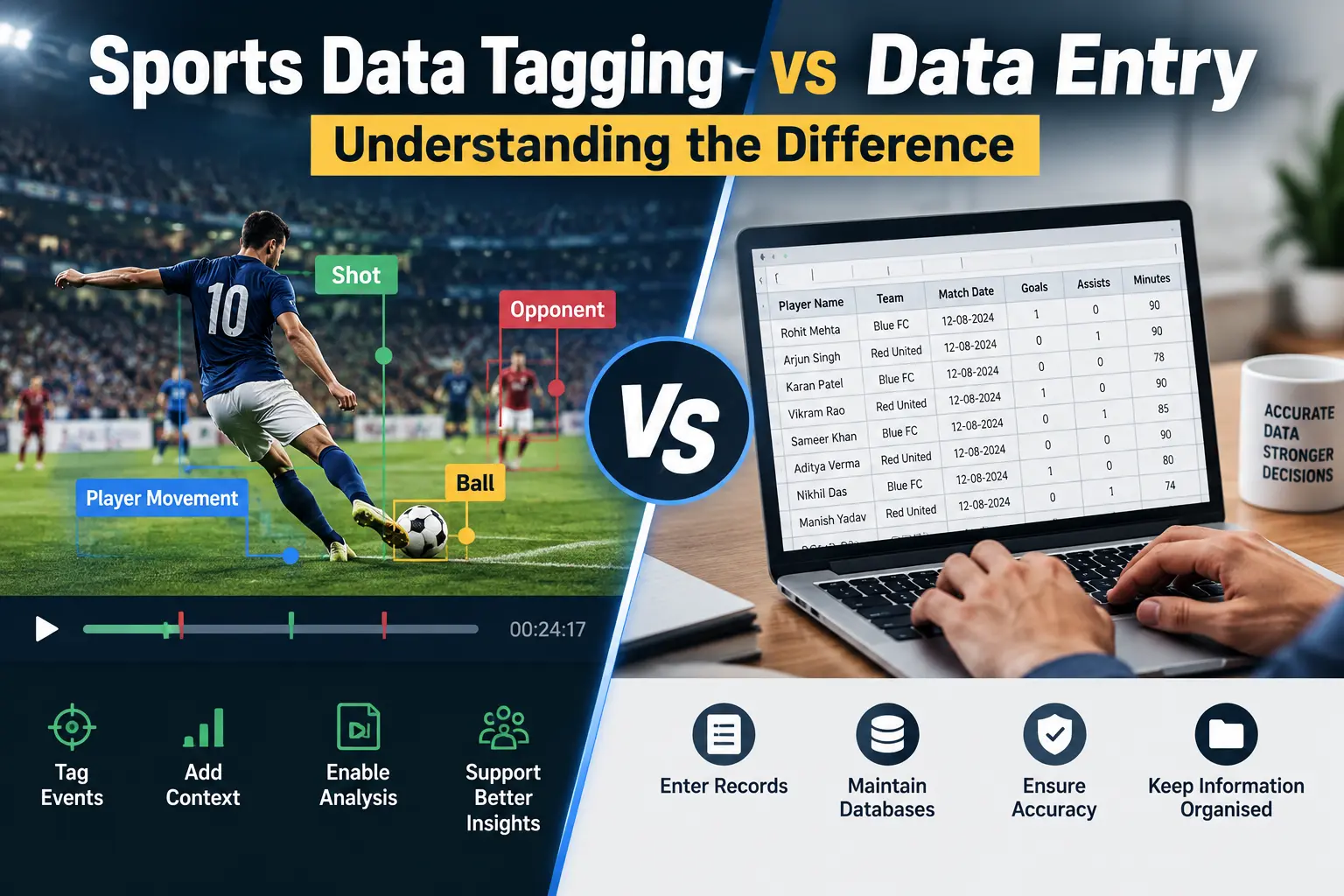

Sports Data Tagging vs Data Entry: Understanding the Difference
Sports businesses deal with a large amount of information every day. Match events, player actions, scores, video footage and records all need to be organised properly. Because of this, Sports Data Tagging vs Data Entry can sometimes seem like a comparison between two similar tasks. They are connected – but they serve different purposes. One adds meaning and context to sports information, while the other focuses mainly on recording and maintaining existing data.
What Is Sports Data Tagging?
Sports data tagging means identifying and labelling specific events, actions or moments in a match or sports video. A tag can represent a goal, assist, foul, shot, substitution, pass or player movement, often along with the exact time at which it happened. That makes the information much easier to search, analyse and use later. For example – a football analyst may need every successful pass made by a particular player, and accurate tagging makes those moments much easier to find.
What Is Data Entry?
Data entry is more straightforward. It involves entering information into spreadsheets, databases, software platforms or other systems and making sure those records remain accurate and organised. In sports – this could include entering player profiles, match schedules, scores, team details, registrations or statistical records. The work still requires attention to detail because even a small mistake can affect the information stored in a database.
Sports Data Tagging vs Data Entry: Key Differences
The biggest difference becomes clear when we look at what happens to the information being handled. Sports data tagging adds context to an event, while data entry usually records information that has already been provided.
Factor |
Sports Data Tagging |
Data Entry |
| Main purpose | Adds context to sports events | Records existing information |
| Data source | Sports video, live feeds or event data | Forms, documents, sheets or databases |
| Level of detail | Focuses on specific actions and events | Focuses on individual records and fields |
| Example | Tagging a goal at a specific timestamp | Entering the final match score |
| Skills required | Sports understanding and accuracy | Data handling and attention to detail |
For that reason – sports data tagging often requires some understanding of the sport being analysed. A person needs to recognise what happened, when it happened and how it should be classified. Traditional data entry, on the other hand, is generally more focused on accurate transcription and organisation.
Why the Difference Matters for Sports Businesses
Choosing the right process matters because the final purpose of the data is different. Accurate tagging can support sports analytics, player performance analysis, scouting, video highlights and content creation. Data entry is equally important when a business needs clean and organised records for teams, players, schedules or statistics. At the same time, many sports companies may need both services because tagged information often needs to be entered, checked and maintained within a larger database.
Which Service Does Your Business Need?
The right choice depends on what you need the data to achieve. When the goal is to identify and classify specific actions from sports footage or event information, sports data tagging services can help turn raw content into structured and useful information. When the requirement is to record, update or organise existing information data entry is usually enough. In many cases – businesses may need both, and that is where Infinite World Solutions can provide the right support for managing sports data tagging and data entry workflows accurately and efficiently.
Frequently Asked Questions
What is the difference between sports data tagging and data entry?
Sports data tagging identifies and labels specific events or actions in sports content, while data entry involves recording existing information in spreadsheets, databases or other systems.
What are some examples of sports data tagging?
Common examples include tagging goals, assists, passes, fouls, shots, substitutions, player movements and other match events, often with precise timestamps.
Does sports data tagging require knowledge of the sport?
Yes, it can. Accurate tagging often requires an understanding of the sport so the person can correctly identify events, actions and their relevant categories.
Can sports data tagging and data entry be used together?
Yes. Many sports businesses use both services. Tagging creates structured information from sports events, while data entry helps record, organise and maintain that information in a database.